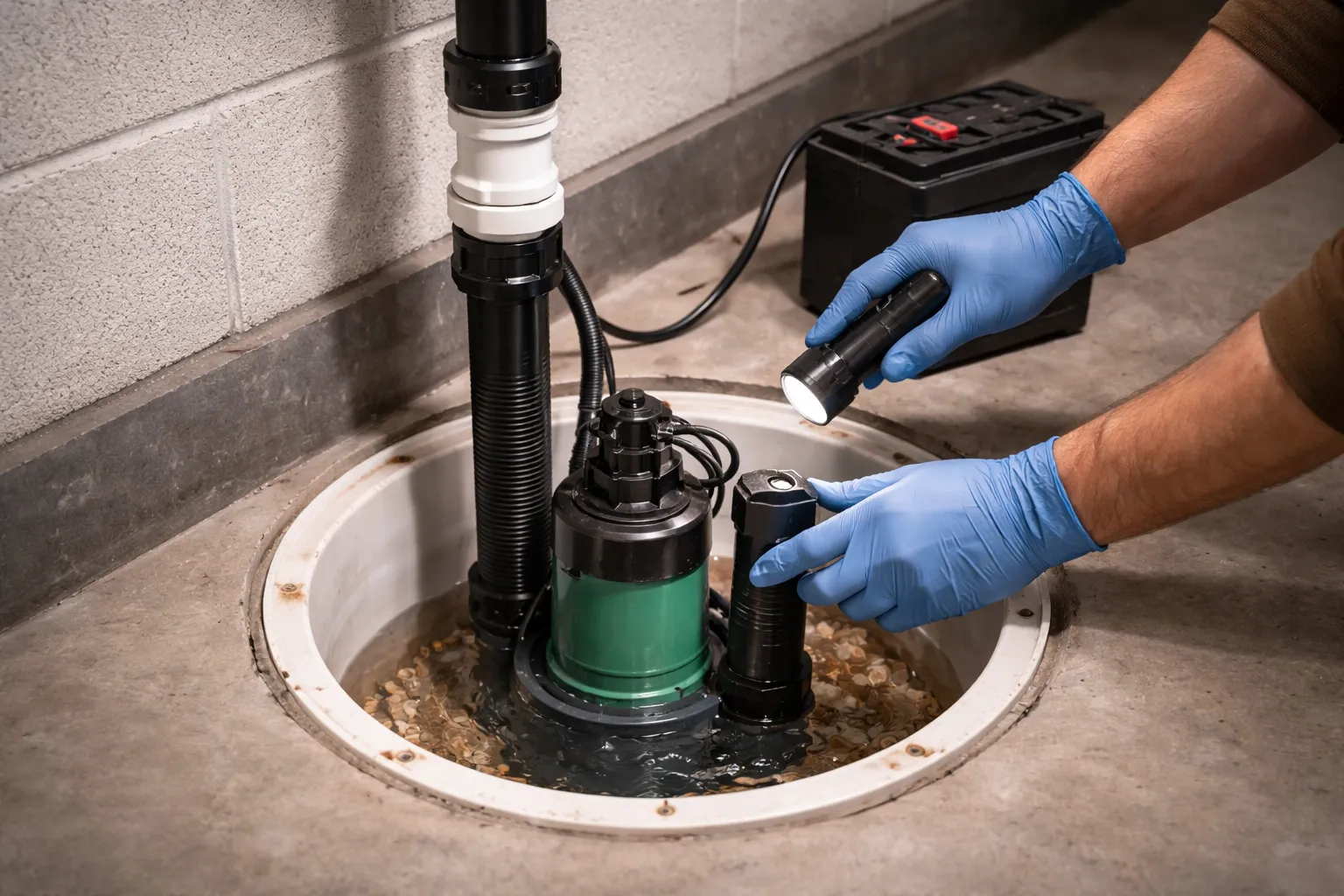
Sump Pump Installation and Maintenance: Complete Guide
A sump pump is your basement's first line of defense against flooding and water damage. Proper installation and regular maintenance ensure your pump works when you need it most, protecting your home from costly water damage.
Professional sump pump installation includes proper sizing, placement, and backup systems to ensure reliable protection during heavy rains and power outages.
How Sump Pumps Work
A sump pump sits in a sump pit (basin) below your basement floor level. When water enters the pit through drain tiles or natural groundwater seepage, a float switch activates the pump, which pushes water through discharge pipes away from your foundation. This automatic operation prevents water from rising above floor level.
The sump pit is typically 18-24 inches in diameter and 22-36 inches deep, lined with a perforated liner that allows water to enter from the surrounding soil. A sealed lid keeps debris out and reduces humidity from evaporation. The discharge pipe carries water at least 10-20 feet away from the foundation to prevent it from cycling back.
Types of Sump Pumps
Submersible Sump Pumps
These pumps sit entirely underwater in the sump pit. They're quieter, more powerful, and have longer lifespans than pedestal pumps. Submersible pumps are ideal for finished basements where noise is a concern.
Advantages: Quieter operation, higher pumping capacity, sealed motor prevents electrical hazards, and the lid can be fully sealed to reduce humidity.
Disadvantages: Higher initial cost, harder to access for repairs, and motor heat is dissipated by surrounding water so running dry can cause damage.
Cost Range: $150-$500 for the pump, $1,500-$3,000 installed.
Lifespan: 7-10 years with proper maintenance.
Pedestal Sump Pumps
These have motors mounted above the sump pit with a shaft extending down to the pump impeller. They're less expensive and easier to service but louder and more obtrusive.
Advantages: Lower cost, easier to access for maintenance and repair, motor stays dry so overheating is less of a concern.
Disadvantages: Louder operation, takes up visible space in the basement, pit cannot be fully sealed, and generally lower pumping capacity.
Cost Range: $75-$250 for the pump, $800-$2,000 installed.
Lifespan: 25-30 years (longer than submersible because the motor stays dry).
Battery Backup Sump Pumps
Critical for homes prone to power outages, battery backup systems keep your pump running during storms when power is most likely to fail and flooding risk is highest.
How They Work: A separate pump with its own float switch operates on a 12-volt marine battery or maintenance-free AGM battery. It activates automatically when the primary pump loses power or cannot keep up with water volume.
Battery Life: A fully charged battery can run the backup pump for 5-12 hours depending on water volume and battery capacity. Some systems include a charger that maintains the battery automatically.
Cost Range: $300-$1,000 for the backup system, $500-$1,500 installed.
Water-Powered Backup Pumps
These backup pumps use your home's municipal water pressure to create suction and remove water from the sump pit. They do not require electricity or batteries, making them extremely reliable during extended power outages.
Advantages: Unlimited run time during outages, no batteries to replace, very reliable.
Disadvantages: Uses municipal water (increases water bill during operation), requires sufficient water pressure (at least 40 PSI), not available for homes on well water, and some municipalities restrict their use.
Cost Range: $200-$500 for the unit, $400-$800 installed.
Sump Pump Installation Process
Step 1: Location Selection
The sump pit should be placed at the lowest point in the basement where water naturally collects. If an interior french drain system exists, the pit goes at the termination point of the drain. Access to an exterior wall for the discharge pipe and proximity to a GFCI electrical outlet are also important factors.
Step 2: Pit Excavation
A hole is cut into the basement floor using a concrete saw and jackhammer. The hole is dug to accommodate the sump basin, typically 18-24 inches in diameter and deep enough for the basin plus a gravel base beneath it. Gravel is placed at the bottom for drainage and stability.
Step 3: Basin Installation
The sump basin (liner) is placed in the hole and leveled. Perforated basins allow water to enter from the surrounding soil, while solid basins are used when connected to a drain tile system. The area around the basin is backfilled with gravel, and the concrete floor is patched around the lip.
Step 4: Pump Installation
The pump is placed inside the basin with the float switch properly positioned. The check valve is installed on the discharge pipe to prevent water from flowing back into the pit when the pump shuts off. All electrical connections are made to a dedicated GFCI outlet.
Step 5: Discharge Line Setup
The discharge pipe runs from the pump through the basement wall or rim joist to the exterior. It must extend at least 10-20 feet from the foundation and discharge to a location that drains away from the house. A freeze guard or buried discharge line prevents winter freezing in cold climates.
Step 6: Testing and Calibration
The system is tested by pouring water into the pit to verify the float switch activates at the correct level, the pump removes water efficiently, and the check valve holds. The backup system is also tested independently to confirm it operates when the primary pump is disabled.
Sump Pump Cost Breakdown
Installation Costs
New Installation (no existing pit):
- Submersible pump with pit: $1,500-$3,000
- Pedestal pump with pit: $800-$2,000
- With battery backup: Add $500-$1,500
- With water-powered backup: Add $400-$800
Pump Replacement (existing pit):
- Submersible pump swap: $400-$900
- Pedestal pump swap: $300-$700
- Backup pump addition: $500-$1,200
Additional Costs
Discharge Line Extension: $200-$800 for buried underground line.
GFCI Outlet Installation: $150-$300 if one is not already near the pit.
Permit Fees: $50-$200 in municipalities that require them.
Interior French Drain Connection: $3,000-$8,000 if adding a perimeter drain at the same time.
Sump Pump Maintenance Schedule
Monthly Tasks
Test the Pump: Pour a bucket of water into the pit to verify the float switch activates and the pump runs. Listen for unusual noises that could indicate bearing wear or impeller damage.
Check the Discharge Line: Walk outside and confirm water exits freely from the discharge point. Look for blockages, ice buildup, or animal nests.
Quarterly Tasks
Clean the Pit: Remove the pump and clear any gravel, sediment, or debris that has accumulated in the bottom of the pit. Debris can clog the intake screen and reduce pump efficiency.
Inspect the Check Valve: Make sure the check valve is not stuck open. A failed check valve causes water to drain back into the pit after each cycle, making the pump run more often and shortening its life.
Test the Backup System: Unplug the primary pump and verify the battery backup or water-powered backup activates correctly. Check battery charge level and replace weak batteries.
Annual Tasks
Professional Inspection: Have a plumber or waterproofing professional inspect the entire system including the pump, pit, discharge line, and any connected drain tiles.
Battery Replacement: Backup pump batteries typically need replacement every 3-5 years. Test capacity annually and replace before the battery can no longer hold a sufficient charge.
Discharge Line Flush: Run a garden hose through the discharge line to clear any buildup. In cold climates, do this before winter to ensure the line is clear for freeze-thaw cycles.
Common Sump Pump Problems and Solutions
Pump Runs Continuously
Possible Causes: Float switch stuck in the on position, check valve failure allowing water to cycle back, undersized pump that cannot keep up with water volume, or a high water table that keeps refilling the pit.
Solutions: Adjust or replace the float switch, install a new check valve, upgrade to a higher-capacity pump, or add a second pump to handle the volume.
Pump Does Not Turn On
Possible Causes: Tripped GFCI outlet, float switch stuck or tangled on the discharge pipe, burnt-out motor, or a clogged intake screen preventing the impeller from spinning.
Solutions: Reset the GFCI, free the float switch, test the motor with a multimeter, or clean the intake. If the motor is dead, replace the pump.
Pump Turns On But Does Not Remove Water
Possible Causes: Clogged or frozen discharge line, failed impeller, air lock in the discharge pipe, or the discharge line is routed uphill without enough pump pressure.
Solutions: Clear the discharge line, replace the impeller, install a weep hole above the pump to prevent air locks, or reroute the discharge line.
Strange Noises
Possible Causes: Debris hitting the impeller, worn bearings, vibration against the pit walls, or a rattling check valve.
Solutions: Clean the pit and impeller, replace worn bearings or the pump, place the pump on a rubber pad to dampen vibration, or tighten or replace the check valve.
Odors from the Sump Pit
Possible Causes: Standing water in the pit breeding bacteria, a dry trap allowing sewer gas to enter, or organic debris decomposing in the pit.
Solutions: Clean the pit thoroughly, ensure the lid is sealed properly, and add a small amount of water periodically if the pit dries out completely between rain events.
Choosing the Right Sump Pump
Sizing Your Pump
Horsepower: Most residential sump pumps range from 1/3 HP to 1 HP. A 1/3 HP pump handles most homes, while 1/2 HP or higher is recommended for homes with high water tables, large basements, or heavy rain areas.
Gallons Per Hour (GPH): Check the pump's flow rate at the vertical lift height (called "head") your installation requires. A pump rated at 3,000 GPH at 0 feet of head may only deliver 1,500 GPH at 10 feet of head.
Switch Type: Vertical float switches are more reliable than tethered floats in narrow pits. Electronic switches have no moving parts and are the most reliable but cost more.
Top Features to Look For
Cast Iron Construction: More durable than plastic and dissipates motor heat better, extending pump life.
Stainless Steel Impeller: Resists corrosion and handles small debris without damage.
Alarm System: High-water alarms alert you if the pump fails or cannot keep up with water volume.
Wi-Fi Monitoring: Smart sump pumps send alerts to your phone when activated, when water levels are high, or when the backup battery is low.
Need Help With Your Basement?
If you're dealing with basement dampness or water damage, our local experts can help. Get a free, no-obligation assessment today.