Mold in Basement: Health Risks and Complete Removal Guide
Basement mold is more than just an unsightly problem—it poses serious health risks to your family and can cause significant structural damage to your home. Understanding mold types, health risks, and proper removal methods is essential for maintaining a safe living environment.
Professional mold remediation ensures complete removal and prevents regrowth, protecting both your health and your property value. This comprehensive guide covers everything you need to know about basement mold.
Understanding Basement Mold: Types and Causes
Basement mold thrives in damp, dark environments with poor air circulation. Understanding the conditions that promote mold growth is the first step in prevention and removal.
Common Basement Mold Types
Black Mold (Stachybotrys chartarum)
While not all black mold is toxic, Stachybotrys produces mycotoxins that can cause serious health problems. It typically appears as slimy, dark greenish-black patches and thrives on materials with high cellulose content like drywall and wood.
Aspergillus
Common in damp basements, this mold can cause lung infections and allergic reactions. It appears in various colors including green, white, or black and is one of the most prevalent mold types in homes.
Penicillium
Often blue or green, Penicillium spreads quickly and can cause allergic reactions. It commonly grows on water-damaged materials and in areas with persistent moisture.
Cladosporium
This olive-green or brown mold grows on both porous and non-porous surfaces. It can trigger asthma attacks and allergic reactions, particularly in sensitive individuals.
Conditions That Promote Basement Mold Growth
High Humidity Levels
Relative humidity above 60% creates ideal conditions for mold growth. Basements naturally have higher humidity due to groundwater proximity and poor ventilation.
Water Intrusion
Foundation leaks, pipe leaks, flooding, or condensation provide the moisture mold needs to thrive. Even small, persistent leaks can support significant mold growth.
Poor Ventilation
Stagnant air prevents moisture evaporation and traps mold spores, creating perfect conditions for colonization and spread.
Organic Materials
Wood, drywall, carpet, and other organic materials provide food sources for mold. Basements often contain these materials in abundance.
Health Risks of Basement Mold Exposure
Mold exposure can cause immediate and long-term health effects, particularly in vulnerable populations including children, elderly individuals, and those with compromised immune systems.
Immediate Health Effects
Allergic Reactions
Sneezing, runny nose, red eyes, and skin rashes are common allergic responses to mold exposure. These symptoms can worsen with continued exposure.
Respiratory Problems
Mold spores can trigger asthma attacks, cause breathing difficulties, and lead to respiratory infections. People with pre-existing respiratory conditions are particularly vulnerable.
Headaches and Fatigue
Mycotoxins produced by certain molds can cause neurological symptoms including headaches, memory problems, and chronic fatigue.
Long-Term Health Consequences
Chronic Sinus Infections
Prolonged mold exposure can lead to persistent sinus inflammation and infections that don't respond well to conventional treatments.
Immune System Suppression
Long-term exposure to mycotoxins can weaken the immune system, making individuals more susceptible to other infections and illnesses.
Neurological Effects
Some molds produce neurotoxins that can cause tremors, confusion, and mood changes with extended exposure.
Professional Mold Removal Process
Professional mold remediation follows industry standards to ensure complete removal and prevent regrowth. The process typically involves multiple phases for thorough treatment.
Phase 1: Assessment and Testing
Visual Inspection
Certified mold inspectors conduct thorough examinations to identify all mold growth areas, including hidden mold behind walls or under flooring.
Air Quality Testing
Professional air sampling determines mold spore concentrations and identifies specific mold species present in your home.
Moisture Source Identification
Thermal imaging and moisture meters detect hidden moisture sources that must be addressed to prevent regrowth.
Phase 2: Containment and Safety
Work Area Isolation
Plastic barriers and negative air pressure systems prevent mold spores from spreading to unaffected areas during removal.
Personal Protective Equipment
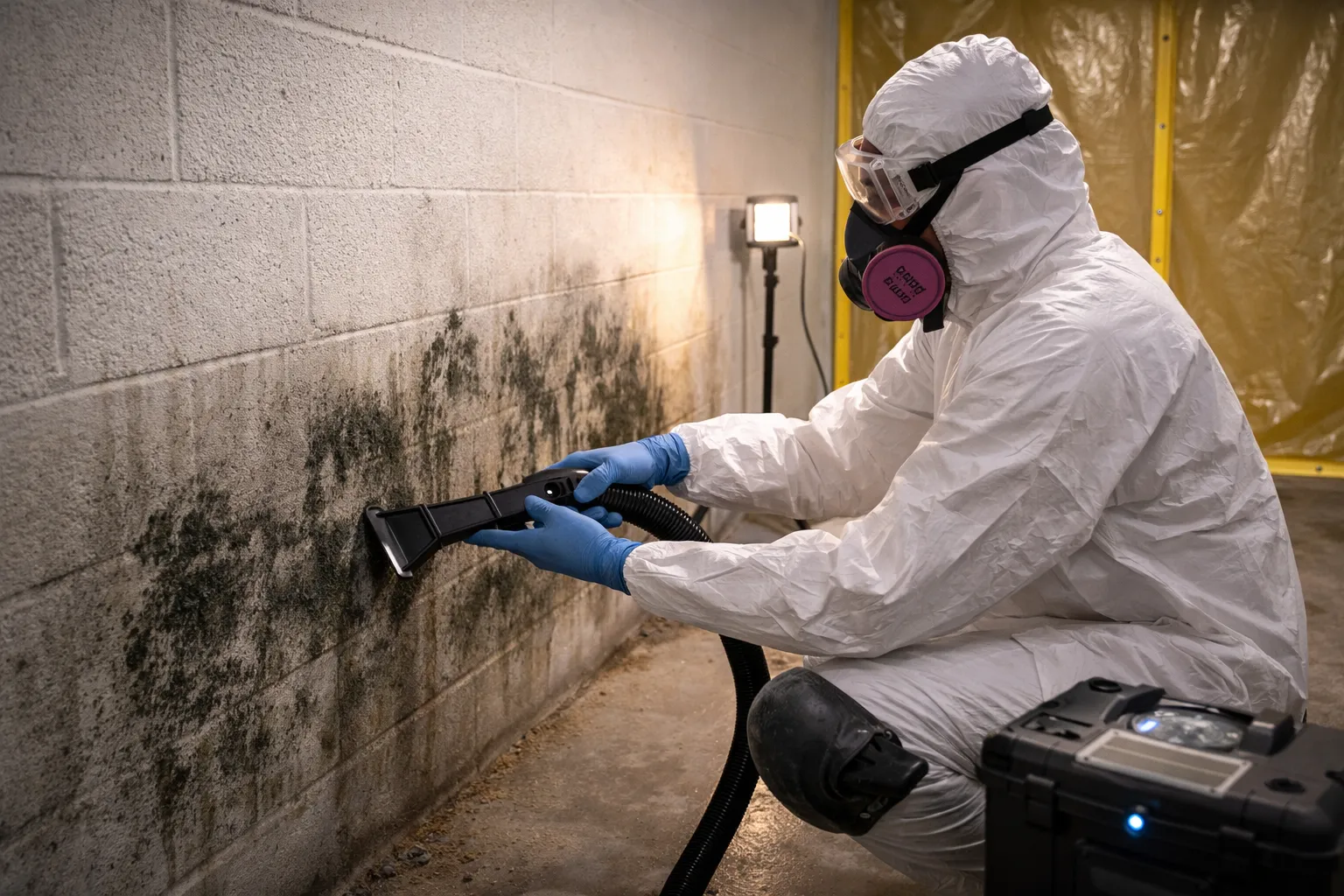
Professionals wear respirators, protective suits, gloves, and eye protection to prevent exposure during removal.
HEPA Air Filtration
Air scrubbers with HEPA filters capture airborne mold spores during the removal process.
Phase 3: Mold Removal and Cleaning
Removal of Contaminated Materials
Porous materials like drywall, carpet, and insulation that can't be thoroughly cleaned are safely removed and disposed of according to regulations.
Surface Cleaning
Non-porous surfaces are cleaned using specialized antimicrobial solutions and mechanical methods to remove all mold growth.
HEPA Vacuuming
All surfaces are vacuumed with HEPA-filtered equipment to remove remaining mold spores.
Phase 4: Restoration and Prevention
Structural Drying
Industrial dehumidifiers and air movers ensure complete drying of all materials to prevent regrowth.
Antimicrobial Treatment
Preventive treatments inhibit future mold growth on susceptible surfaces.
Moisture Source Correction
Underlying water problems are fixed to prevent recurring mold issues.
Mold Removal Costs and Considerations
Professional mold remediation costs vary based on extent of contamination, affected areas, and necessary repairs.
Cost Factors
Size of Affected Area
Small areas (under 10 square feet): $500-$1,000
Medium areas (10-100 square feet): $2,000-$6,000
Large areas (over 100 square feet): $6,000-$30,000+
Mold Type and Location
Toxic molds or hard-to-access areas increase costs due to additional safety requirements and labor.
Structural Repairs
Replacing drywall, insulation, or other materials adds to overall costs but is necessary for complete remediation.
Insurance Coverage
Many homeowners policies cover mold removal if it results from a covered peril like pipe bursts or appliance failures. Gradual mold growth from humidity may not be covered.
Preventing Basement Mold Growth
Moisture Control Strategies
Dehumidification
Maintain basement humidity between 30-50% using properly sized dehumidifiers with continuous drainage systems.
Waterproofing
Apply foundation waterproofing membranes and ensure proper exterior drainage to prevent water intrusion.
Regular Inspections
Check for leaks, condensation, or musty odors monthly. Early detection prevents major mold problems.
Improving Air Quality
Ventilation Enhancement
Install exhaust fans or mechanical ventilation systems to improve air circulation and reduce moisture buildup.
Air Purification
HEPA air purifiers capture mold spores and improve overall air quality in basement areas.
Regular Cleaning
Regular vacuuming with HEPA filters and damp cleaning prevents dust and mold spore accumulation.
Need Help With Your Basement?
If you're dealing with basement dampness or water damage, our local experts can help. Get a free, no-obligation assessment today.