French Drain Installation: Complete Cost and Installation Guide
French drains are one of the most effective solutions for managing groundwater and protecting your foundation from water damage. Understanding installation costs, types, and benefits helps you make informed decisions about basement drainage solutions.
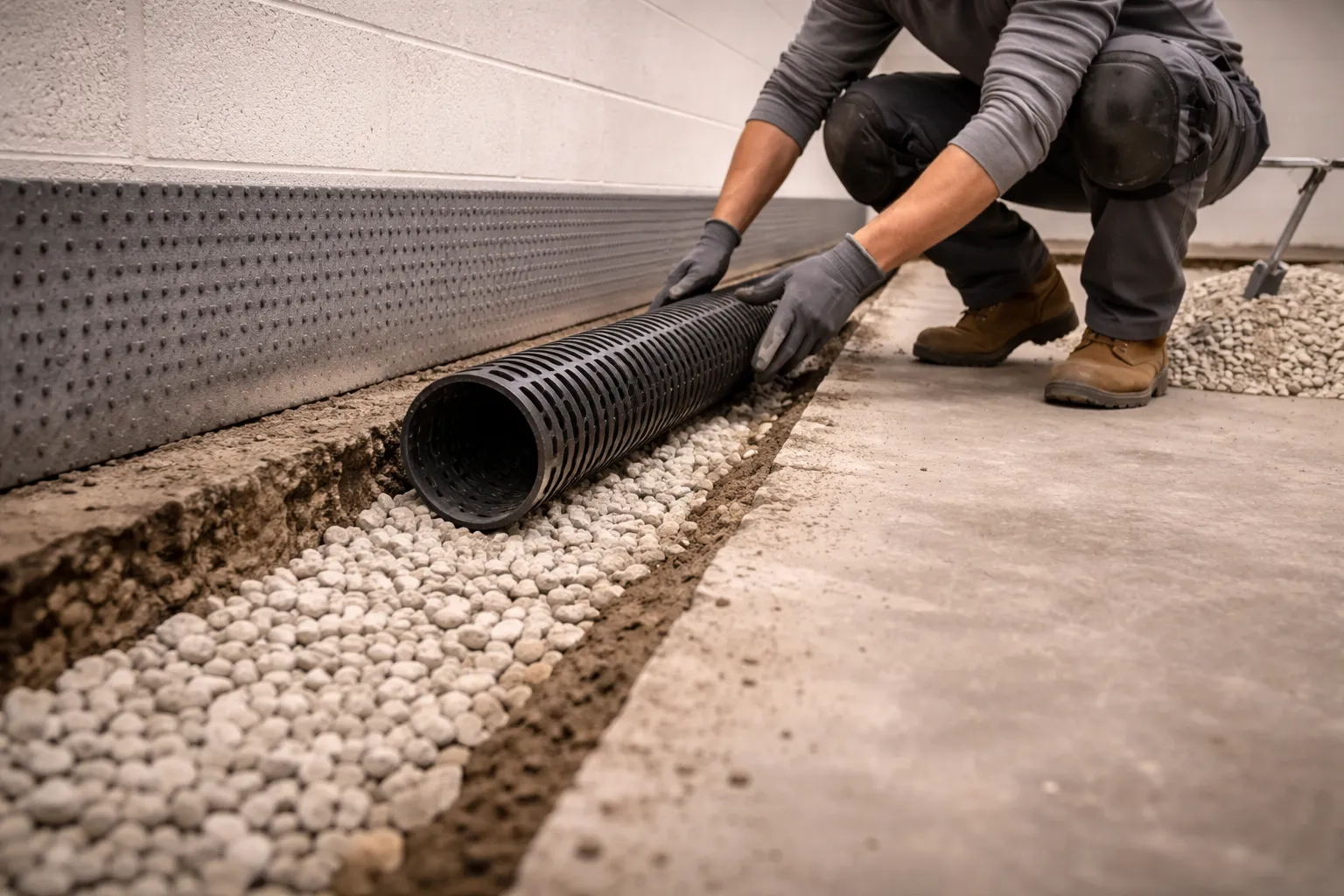
Professional french drain installation ensures proper grading, drainage, and long-term protection against water damage and foundation issues.
What Is a French Drain?
A french drain is a trench filled with gravel and a perforated pipe that redirects surface water and groundwater away from your foundation. This drainage system prevents water from pooling around your foundation and causing basement moisture problems.
The concept is simple but effective. Water follows the path of least resistance, so by creating a gravel-filled channel with a sloped pipe, you give water an easy route away from your home instead of letting it press against your foundation walls.
Types of French Drains
Exterior French Drains
Installed outside your foundation, exterior french drains collect water before it reaches your foundation walls. These are most effective for preventing water intrusion but require excavation around the perimeter of your home.
How They Work: A trench is dug along the outside of your foundation, typically down to the footing level. A perforated pipe is placed at the bottom, surrounded by gravel, and covered with filter fabric to prevent clogging. Water entering the trench flows into the pipe and is directed to a storm drain, dry well, or lower area of your property.
Best For: Homes with significant groundwater pressure, recurring basement flooding, or new construction where excavation is already happening.
Cost Range: $4,000-$12,000 depending on home size and soil conditions.
Interior French Drains
Installed along your basement floor perimeter, interior french drains collect water that enters through foundation walls and channel it to a sump pump. These are less invasive than exterior systems but address water after it has already entered your basement.
How They Work: A channel is cut into the basement floor along the perimeter walls. A perforated pipe is set in gravel within this channel and connected to a sump pit. Water seeping through the walls drains into the channel and flows to the sump pump, which ejects it away from the house.
Best For: Existing homes where exterior excavation is impractical, homes with finished landscaping or limited yard access, or as a complement to exterior waterproofing.
Cost Range: $3,000-$8,000 depending on basement size and complexity.
Curtain Drains
Installed upslope from your home, curtain drains intercept surface water before it reaches your property. These are ideal for homes on sloped properties with surface water runoff issues.
How They Work: A shallow trench is dug across the slope above your home. The perforated pipe and gravel redirect water around the house to a safe discharge point. Curtain drains are typically shallower than foundation-level french drains.
Best For: Properties on hills or slopes, yards with standing water after rain, or areas where surface runoff is the primary concern rather than groundwater.
Cost Range: $1,500-$5,000 depending on length and terrain.
French Drain Installation Process
Step 1: Site Assessment and Planning
A professional evaluates your property to determine the best drain placement, slope requirements, and discharge location. This includes checking utility locations, soil type, and local building codes. Permits may be required depending on your municipality.
Step 2: Excavation
For exterior drains, a trench is dug along the foundation, typically 18-24 inches wide and deep enough to reach the footing. Interior drains require cutting a channel into the basement floor using a concrete saw. The trench must slope at a minimum of 1% grade (about 1 inch per 8 feet) toward the discharge point.
Step 3: Pipe and Gravel Placement
Filter fabric lines the trench to prevent soil from clogging the system. A layer of clean, washed gravel goes in first, followed by the perforated pipe (typically 4-inch rigid PVC or flexible corrugated pipe), and then more gravel on top. The pipe holes face downward so rising water enters from below.
Step 4: Connections and Discharge
The pipe connects to a sump pump (for interior systems), a storm drain, a pop-up emitter, or a gravity-fed discharge point at a lower elevation. Proper discharge is critical—water must exit far enough from the house that it does not circle back toward the foundation.
Step 5: Backfill and Restoration
Exterior trenches are backfilled with gravel and topped with soil or sod. Interior channels are filled with gravel and sealed with fresh concrete. Landscaping and hardscaping are restored to pre-construction condition.
French Drain Cost Breakdown
Cost by Type
Interior French Drain:
- Basic system (small basement): $3,000-$5,000
- Full perimeter system: $5,000-$8,000
- With sump pump installation: $6,000-$10,000
Exterior French Drain:
- Partial perimeter: $4,000-$7,000
- Full perimeter: $7,000-$12,000
- With waterproof membrane: $10,000-$15,000
Curtain Drain:
- Short run (25-50 feet): $1,500-$3,000
- Long run (50-100 feet): $3,000-$5,000
Factors That Affect Cost
Soil Conditions: Rocky or clay-heavy soil is harder to excavate and increases labor costs significantly.
Depth and Length: Deeper trenches and longer runs require more materials and labor time.
Accessibility: Tight spaces, decks, porches, or landscaping that must be removed and restored add to the total.
Permits and Inspections: Some municipalities require permits for drainage work, adding $100-$500 to the project.
Discharge Method: Connecting to a municipal storm drain costs more than a simple pop-up emitter or dry well.
French Drain Materials and Components
Pipe Options
Rigid PVC Pipe: More durable, resists crushing, and easier to clean. Preferred for permanent installations and deeper systems. Costs slightly more but lasts longer.
Corrugated Flexible Pipe: Easier to install around curves, less expensive, but more prone to clogging and crushing over time. Suitable for shallow curtain drains and temporary solutions.
Gravel and Aggregate
Clean, washed gravel (typically 3/4 inch to 1.5 inch stone) surrounds the pipe and fills the trench. Avoid using limestone in areas with acidite soil, as it can dissolve over time. River rock or granite aggregate are the most durable choices.
Filter Fabric
Non-woven geotextile fabric wraps around the gravel to prevent fine soil particles from clogging the system. This is one of the most important components for long-term performance and should never be skipped.
French Drain Maintenance
Annual Maintenance Tasks
Inspect Discharge Points: Make sure pop-up emitters, dry wells, or outlet pipes are clear of debris, leaves, and sediment.
Check for Standing Water: If water pools near the drain after rain, the system may be clogged or the slope may have shifted.
Clean Sump Pump: For interior systems connected to a sump pump, clean the pump pit and test the float switch at least twice per year.
Signs Your French Drain Needs Repair
Water Reappearing in Basement: If water problems return after installation, the drain may be clogged with sediment or roots.
Soggy Spots in Yard: Wet areas along the drain path suggest a pipe collapse or blockage.
Slow Drainage: Water draining more slowly than when the system was new indicates buildup inside the pipe.
Common Repairs
Most french drain problems involve sediment buildup or root intrusion. Professional hydro-jetting can clear blockages without excavation. If the pipe has collapsed, partial replacement of the affected section is usually sufficient. Average repair costs range from $500-$2,500 depending on the issue.
DIY vs Professional French Drain Installation
When DIY Makes Sense
Simple curtain drains in soft soil with easy access can be a weekend project for handy homeowners. Shallow surface drains to redirect yard water are also manageable. Budget around $500-$1,500 for materials on a DIY project.
When You Need a Professional
Interior basement drains, deep exterior drains near the foundation, or any system requiring a sump pump should be installed by a professional. Improper slope, poor pipe placement, or inadequate discharge can make water problems worse instead of better. Professionals also handle permits and provide warranties.
Need Help With Your Basement?
If you're dealing with basement dampness or water damage, our local experts can help. Get a free, no-obligation assessment today.