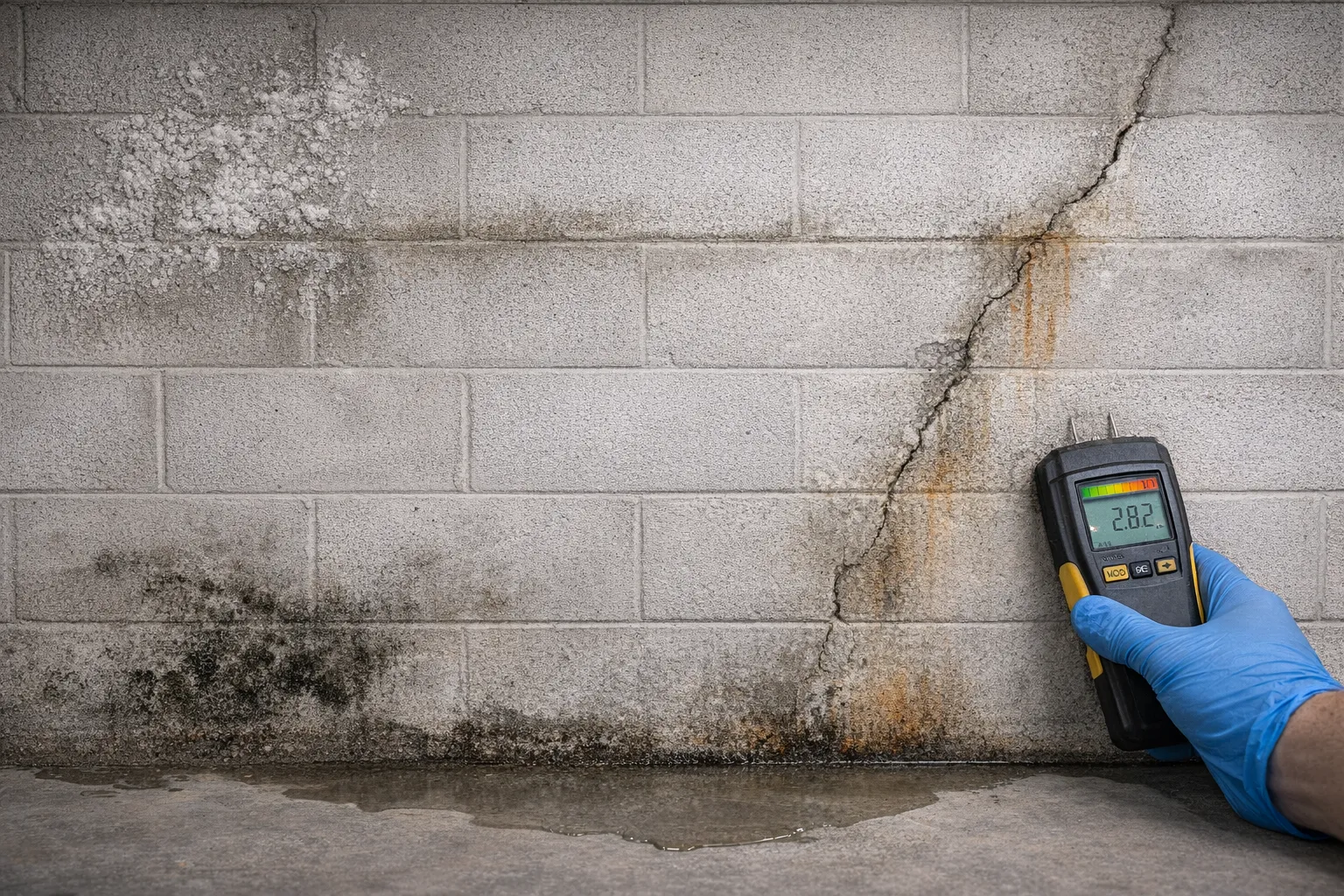
Signs of Water Damage in Your Basement You Shouldn't Ignore
Water damage in your basement often begins subtly—a small damp spot here, a musty odor there—but can quickly escalate into major structural problems and health hazards. Recognizing these early warning signs can save you thousands in repairs and protect your family's health.
Professional water damage assessment identifies both obvious and hidden damage, ensuring comprehensive restoration that prevents future problems.
Critical Signs of Basement Water Damage
Visible Water Stains and Discoloration
Yellow, brown, or dark stains on walls, floors, or ceilings indicate water has penetrated these materials. These stains often appear in patterns that show how water entered and spread through your basement.
Action Required: Document the stains with photos and contact a professional immediately. Stains often indicate ongoing water intrusion that needs immediate attention.
Musty Odors and Mold Growth
Persistent musty smells indicate hidden moisture and likely mold growth. Even if you can't see mold, the odor suggests it's growing behind walls, under flooring, or in other hidden areas.
Health Warning: Mold can cause serious respiratory issues, allergic reactions, and other health problems. Professional mold testing and remediation may be necessary.
Warped or Buckled Flooring
Wood flooring that cups, crowns, or buckles indicates moisture absorption. Laminate and vinyl flooring may bubble or peel when water penetrates beneath the surface.
Structural Concern: Warped flooring often indicates prolonged water exposure that may have damaged subflooring and joists.
Efflorescence and Mineral Deposits
White, chalky deposits on foundation walls indicate water seepage through concrete. These mineral deposits are left behind as water evaporates and can be a sign of ongoing moisture problems.
Peeling Paint and Wallpaper
When moisture gets behind paint or wallpaper, it causes bubbling, peeling, and complete detachment. This is often one of the first visible signs of water intrusion.
Rust Stains on Appliances and Fixtures
Rust appearing on metal appliances, water heaters, furnaces, or support columns in the basement suggests prolonged moisture exposure. Even if you don't see standing water, rust means humidity levels have been consistently too high or water has been splashing or pooling near these items.
Crumbling or Spalling Concrete
When water repeatedly enters and exits concrete through freeze-thaw cycles, the surface begins to flake and crumble. This process, called spalling, weakens foundation walls over time and can lead to larger structural cracks if left untreated.
Hidden Water Damage Indicators
Unexplained Increase in Utility Bills
Sudden spikes in water bills may indicate hidden plumbing leaks. Even small, continuous leaks can waste hundreds of gallons and cause significant damage over time.
Sounds of Running Water
Hearing water running when no fixtures are in use indicates active leaks. This may be behind walls or under floors, requiring professional detection equipment.
Soft or Spongy Walls and Floors
When drywall or wood becomes saturated, it loses structural integrity and feels soft or spongy to the touch. This indicates advanced water damage requiring immediate replacement.
Insect and Pest Activity
Termites, carpenter ants, silverfish, and centipedes thrive in damp environments. A sudden increase in pest activity in your basement often points to hidden moisture that is attracting these insects. Termites in particular can cause extensive structural damage once they establish a colony in water-softened wood.
Sagging or Stained Ceiling Tiles
If your basement has a drop ceiling, look for tiles that are sagging, discolored, or have dark rings. These marks indicate water from above, such as a leaking pipe, a failed seal around a bathtub, or condensation dripping from ductwork hidden in the ceiling cavity.
Seasonal Water Damage Patterns
Spring Snowmelt and Rain
Spring is the most common season for basement water problems. Melting snow saturates the soil around your foundation, and heavy rain adds even more moisture. If your grading slopes toward the house or gutters are clogged, water pressure against the foundation walls increases dramatically during this period.
Summer Humidity and Condensation
Hot, humid air entering a cool basement causes condensation on walls, pipes, and floors. Many homeowners mistake this condensation for a leak. The fix is usually improved ventilation or a properly sized dehumidifier rather than waterproofing repairs.
Fall Leaf Buildup
Leaves clogging gutters and downspouts in autumn cause water to overflow and pool near the foundation. This is one of the easiest water damage risks to prevent through regular gutter cleaning before and during the fall season.
Winter Freeze-Thaw Cycles
Water that enters small foundation cracks expands when it freezes, making the cracks larger. Over multiple winters, this freeze-thaw cycle can turn hairline cracks into significant entry points for water. Inspecting and sealing cracks before winter is an important preventive step.
Professional Water Damage Assessment Process
Moisture Detection Equipment
Professionals use thermal imaging cameras, moisture meters, and hygrometers to detect hidden moisture that isn't visible to the naked eye.
Structural Integrity Evaluation
Engineers assess foundation damage, joist conditions, and overall structural stability to determine the extent of damage and necessary repairs.
Mold and Air Quality Testing
Air quality tests identify mold spores and other contaminants that may affect indoor air quality and occupant health.
Comprehensive Damage Report
A detailed report outlines every affected area, the severity of damage, recommended repairs, and estimated costs. This document is also valuable for insurance claims and for comparing contractor proposals.
Emergency Response and Prevention
Immediate Actions Required
When you discover water damage, turn off water sources, electricity to affected areas, and begin water extraction immediately. The first 24-48 hours are critical for preventing mold growth.
Professional Water Extraction
Industrial-grade extraction equipment removes water quickly and efficiently. Professionals also use specialized drying equipment to prevent secondary damage.
Long-term Prevention Strategies
Install proper drainage systems, waterproof foundation walls, and maintain gutters and downspouts. Regular inspections catch problems before they become severe.
Creating a Water Damage Emergency Plan
Every homeowner should know where their main water shut-off valve is located and how to turn off electricity to the basement. Keep a list of emergency contacts including a plumber, a water damage restoration company, and your insurance provider. Having a small emergency kit in the basement with a flashlight, towels, and a wet-dry vacuum can also help minimize damage in the critical first minutes.
Need Help With Your Basement?
If you're dealing with basement dampness or water damage, our local experts can help. Get a free, no-obligation assessment today.