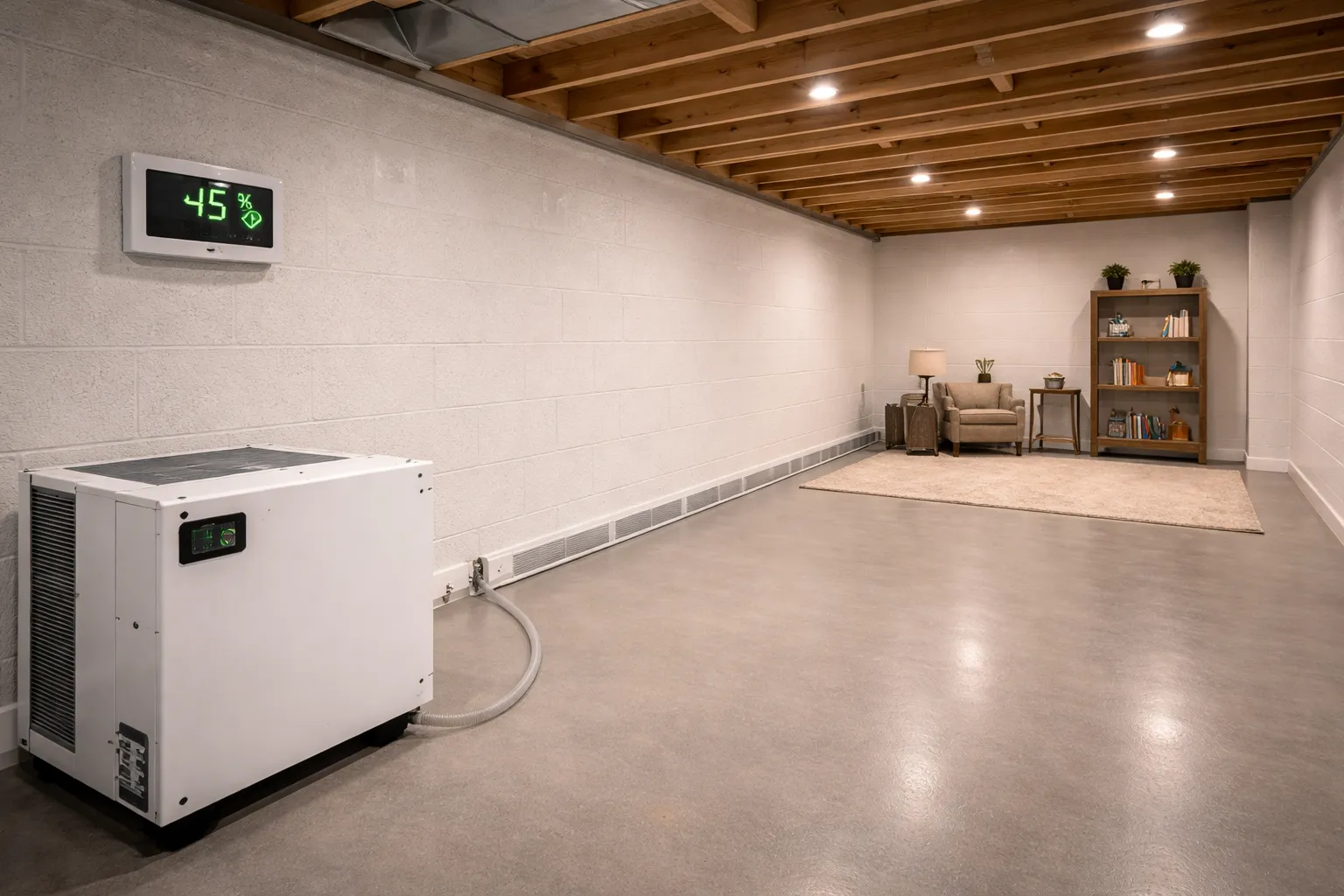
Basement Humidity Control: Complete Guide to Dry, Healthy Spaces
Basement humidity control is essential for maintaining healthy indoor air quality, preventing mold growth, and protecting your home's structural integrity. This comprehensive guide covers everything you need to know about managing basement moisture effectively.
With over 20 years of experience in basement moisture control across 40+ cities, our experts provide proven strategies for maintaining optimal humidity levels in any basement environment.
Understanding Basement Humidity Problems
Before implementing solutions, it's crucial to understand what causes basement humidity issues and why they matter.
What Causes High Basement Humidity?
Ground Moisture Seepage: Water naturally seeps through concrete foundation walls and floors, especially in areas with high water tables or poor drainage.
Poor Ventilation: Basements typically have limited air circulation, allowing moisture to accumulate and stagnate.
Condensation: Warm, humid air contacting cool basement surfaces creates moisture buildup, particularly during summer months.
Plumbing Leaks: Hidden pipe leaks or condensation on plumbing fixtures can significantly increase humidity levels.
Drying Laundry: Clothes dryers vented into basements or air-drying laundry adds substantial moisture to the air.
Why Basement Humidity Matters
Health Impacts: High humidity creates ideal conditions for mold growth, which can cause respiratory issues, allergic reactions, and other health problems.
Structural Damage: Excess moisture can damage wood framing, drywall, insulation, and even concrete over time.
Energy Costs: Humid air requires more energy to heat and cool, increasing utility bills.
Comfort Issues: Damp basements feel uncomfortable and may have persistent musty odors.
Ideal Basement Humidity Levels
Maintaining proper humidity levels is key to preventing moisture-related problems.
Target Humidity Range
Optimal Range: 30-50% relative humidity
Too Low: Below 30% can cause dry air, wood damage, and respiratory irritation
Too High: Above 60% creates conditions for mold growth and dust mites
Danger Zone: Above 70% significantly increases mold and mildew risk
Seasonal Variations
Summer: Higher outdoor humidity typically increases basement moisture levels
Winter: Cold surfaces can cause condensation, while heating systems may dry air excessively
Spring/Fall: Transition seasons often bring fluctuating humidity levels requiring active management
Measuring Basement Humidity
Accurate measurement is essential for effective humidity control.
Types of Humidity Measurement Tools
Digital Hygrometers: Electronic devices that provide precise humidity readings and often track trends over time.
Analog Hygrometers: Mechanical devices that show humidity levels but may be less accurate.
Smart Home Sensors: Connected devices that monitor humidity and send alerts to your phone.
Professional Meters: High-precision tools used by professionals for detailed moisture assessment.
Proper Measurement Techniques
Multiple Locations: Measure humidity in different areas of the basement as levels can vary.
Different Heights: Measure at both floor level and chest height for accurate readings.
Consistent Timing: Measure at the same time daily to track trends accurately.
Seasonal Tracking: Monitor how humidity changes throughout the year for pattern identification.
Dehumidification Solutions
Dehumidifiers are the most effective tool for actively removing excess moisture from basement air.
Types of Dehumidifiers
Refrigerant Dehumidifiers: Most common type that works like air conditioners to condense moisture from air.
Desiccant Dehumidifiers: Use moisture-absorbing materials, ideal for colder temperatures.
Whole-House Dehumidifiers: Integrated with HVAC systems for comprehensive humidity control.
Portable Units: Standalone dehumidifiers for specific areas or supplemental control.
Choosing the Right Size Dehumidifier
Capacity Measurement: Dehumidifiers are rated by pints per day (PPD) of moisture removal.
Small Basements (up to 1,000 sq ft): 30-40 PPD unit
Medium Basements (1,000-1,500 sq ft): 40-50 PPD unit
Large Basements (1,500-2,500 sq ft): 50-70 PPD unit
Very Large Basements (2,500+ sq ft): 70+ PPD unit or multiple units
Dehumidifier Features to Consider
Continuous Drainage: Hose connection for automatic drainage eliminates emptying reservoirs.
Humidistat: Built-in humidity sensor for automatic operation based on target levels.
Energy Efficiency: ENERGY STAR certified models use 15% less energy.
Low Temperature Operation: Essential for basements that get cold in winter.
Auto Defrost: Prevents ice buildup in cold conditions.
Ventilation and Air Circulation
Proper ventilation works alongside dehumidification to control moisture effectively.
Natural Ventilation Methods
Windows and Vents: Open basement windows on dry, low-humidity days to exchange air.
Cross Ventilation: Create airflow by opening windows on opposite sides of basement.
Seasonal Ventilation: Increase ventilation during dry seasons, reduce during humid periods.
Mechanical Ventilation Systems
Exhaust Fans: Install dedicated exhaust fans to move moist air outside.
Heat Recovery Ventilators (HRVs): Exchange indoor and outdoor air while retaining heat.
Energy Recovery Ventilators (ERVs): Transfer both heat and moisture between air streams.
Whole-House Fans: Improve overall air circulation including basement areas.
Air Circulation Strategies
Ceiling Fans: Install ceiling fans to improve air movement and prevent stagnant areas.
Portable Fans: Use strategically placed fans to direct air flow and dry damp areas.
Furniture Placement: Arrange furniture to allow air to circulate freely around walls and corners.
Moisture Source Elimination
Controlling humidity sources is more effective than treating symptoms alone.
Foundation and Wall Sealing
Waterproof Coatings: Apply sealants to foundation walls and floors to prevent moisture seepage.
Crack Repair: Seal foundation cracks with epoxy or polyurethane injections.
Vapor Barriers: Install plastic vapor barriers on walls and floors to block moisture transmission.
Exterior Drainage: Ensure proper grading and drainage around foundation to prevent water accumulation.
Plumbing and Appliance Management
Leak Detection: Regularly inspect pipes, faucets, and appliances for leaks.
Insulation: Insulate cold water pipes to prevent condensation.
Appliance Venting: Ensure clothes dryers and other appliances vent properly to the outside.
Water Heater Maintenance: Check water heater temperature and pressure relief valve for proper operation.
Groundwater Management
Sump Pumps: Install and maintain sump pumps to remove groundwater before it enters basement.
French Drains: Install drainage systems to divert water away from foundation.
Gutter Systems: Clean and maintain gutters and downspouts to direct water away from house.
Landscaping: Grade soil away from foundation and use plants that don't require excessive watering near foundation.
Advanced Humidity Control Strategies
For persistent or severe humidity problems, advanced solutions may be necessary.
Smart Humidity Control Systems
Automated Controls: Smart thermostats and humidity sensors that coordinate dehumidification with HVAC systems.
Remote Monitoring: Systems that alert you to humidity problems via smartphone apps.
Predictive Algorithms: AI-powered systems that learn your home's patterns and adjust automatically.
Professional Moisture Assessment
Moisture Mapping: Professional assessment using thermal imaging and moisture meters.
Air Quality Testing: Comprehensive testing for mold spores and other moisture-related contaminants.
Structural Analysis: Engineering assessment to identify moisture-related structural issues.
Integrated Solutions
Whole-Home Systems: Integrated humidity control that coordinates multiple systems.
Zoned Control: Different humidity levels for different areas of the home.
Energy Recovery: Systems that manage humidity while maximizing energy efficiency.
Maintenance and Monitoring
Regular maintenance ensures continued effectiveness of humidity control systems.
Daily and Weekly Tasks
Daily: Check humidity levels and ensure dehumidifier is operating properly.
Weekly: Empty dehumidifier reservoirs (if not using continuous drainage) and clean filters.
Bi-weekly: Inspect for signs of moisture or mold growth in problem areas.
Monthly and Seasonal Maintenance
Monthly: Clean dehumidifier coils and check drainage systems.
Seasonal: Adjust humidity targets based on seasonal changes and inspect ventilation systems.
Annual: Professional inspection of all humidity control systems and moisture assessment.
Long-term Monitoring
Trend Analysis: Track humidity patterns over time to identify problem areas.
System Upgrades: Plan for equipment replacement every 5-7 years.
Preventive Maintenance: Schedule professional service before peak humidity seasons.
Need Help With Your Basement?
If you're dealing with basement dampness or water damage, our local experts can help. Get a free, no-obligation assessment today.